foresights
The decisions leaders make today are shaped by what they understand about tomorrow. That's precisely why we built foresights—a dedicated space for sharing the ideas, trends, issues, and signals influencing the futures of leaders and their organisations.
Search the blog;
Visit here to see blog posts available in alternate languages.
Five Reasons to Say "Futures" Instead of "the Future".
You should read this if… you want to break free from the assumption that there is a single, predictable “future” waiting to unfold. This article explains why we deliberately use the word futures—plural—to reflect the reality that multiple possible, plausible, and preferred futures exist, shaped by choices made in the present. It shows how shifting language from “the future” to “futures” changes how leaders think, helping them challenge linear assumptions, embrace uncertainty, and expand strategic options so decisions are better suited to a complex, fast‑changing world rather than anchored to one imagined outcome.

What Business Problems Does Foresight Address?
You should read this if… you are a CEO or board member facing uncertainty and noticing that traditional defensive responses—cutting investment, freezing hiring, or delaying decisions—are starting to limit growth and opportunity. This article explains the core business problems that foresight is designed to address, including indecision in volatile environments, over‑reliance on past data, missed emerging opportunities, and an inability to adapt strategy as conditions change. It shows how strategic foresight helps leaders move from reactive cost‑cutting to proactive decision‑making by using signals, trends, and alternative futures to make more confident, informed choices that support resilience, innovation, and long‑term success.

The Futures of Work: Balancing Technology and Jobs.
The futures of work are changing at a rapid pace, and it's hard not to be excited and curious about them! With the rise of robots, artificial intelligence, and smart technologies, it seems as though the possibilities are endless. What could happen next?

How The World Changes: Slowly, Then Suddenly.
You should read this if… you are sensing that major change rarely arrives as a single shock, but still feel surprised when disruption suddenly becomes unavoidable. This article explains how the world tends to change slowly at first and then suddenly, using concepts such as exponential growth and tipping points to show why long periods of apparent stability can give way to rapid transformation. It highlights why linear thinking leaves leaders exposed, and how futures thinking helps organisations spot early signals of change, understand non‑linear dynamics, and prepare for multiple futures before sudden shifts reshape markets, industries, and operating models.

Why Are Businesses Avoiding Talking About Radical Transformation?
You should read this if… you are a leader who senses that radical transformation is needed, yet notices how often organisations default to incremental change instead. This article explores why businesses avoid talking openly about radical transformation—highlighting factors such as risk aversion, fear of uncertainty, attachment to existing models, and the comfort of short‑term optimisation. It explains how futures thinking can help leaders create a safer, more constructive space to explore deep change by reframing uncertainty, expanding strategic options, and enabling organisations to engage with transformative possibilities before external shocks force change on their terms.

Be Bold. Prepare for Futures: A guide to exploring tomorrow, today.
Key note presentation: 0900 Friday 24 March 2023, Local Government Association of South Australia Communications Conference, Adelaide, South Australia.

How to Use Foresight to Ensure Long-Term Success.
You should read this if… you are looking to move beyond short‑term thinking and build lasting advantage in an increasingly uncertain business environment. This article explains how foresight can be used to support long‑term success by helping leaders better understand their industry, anticipate customer needs, and stay ahead of technological and market change. It shows how bringing external signals, trends, and emerging issues into decision‑making enables organisations to manage uncertainty more effectively, reduce risk, and make smarter strategic choices today that strengthen resilience and competitiveness over the long term.

Prepare Your Business for Futures with insight & foresight.
The world is becoming more complex and unpredictable, making it difficult for businesses to stay ahead of their competition. This is where strategic foresight comes into play. It allows businesses to identify potential risks and opportunities before they arise, allowing them to make informed decisions about how best to move forward.

futures insights: New work values.
Rather than solely striving for financial success, an increasing number of people recognise the importance of leisure time. How could this change in values alter our relationship to work and leisure? What role will AI and automation play? Its time to start thinking about this emerging change and its impact!

How to Stay Ahead in a Rapidly Changing World.
You should read this if… you are feeling the pressure of constant change and want to move from reacting to disruption to anticipating it. This article explains why staying ahead in a rapidly changing world requires more than speed—it requires foresight to think ahead, prepare for uncertainty, and understand how industry, technology, and market shifts might unfold. It shows how using foresight helps leaders scan for emerging change, challenge assumptions, and make better strategic choices today so their organisations can adapt, remain competitive, and thrive as conditions evolve rather than being caught off guard.

Case Study: How to Review Your Strategy with Foresight.
You should read this if… you are a CEO, executive or board member who wants to pressure‑test your current strategy against a changing world rather than assume it will remain valid. This case study shows how reviewing strategy through a foresight lens helps leaders step back from short‑term assumptions, surface emerging external forces, and ask how the organisation itself may need to change as markets, technology, and customer expectations evolve. It demonstrates how structured foresight processes—such as trend analysis, leadership engagement, and scenario exploration—can unlock clearer conversations, stronger alignment, and more resilient strategic choices that are better suited to uncertainty and long‑term growth.
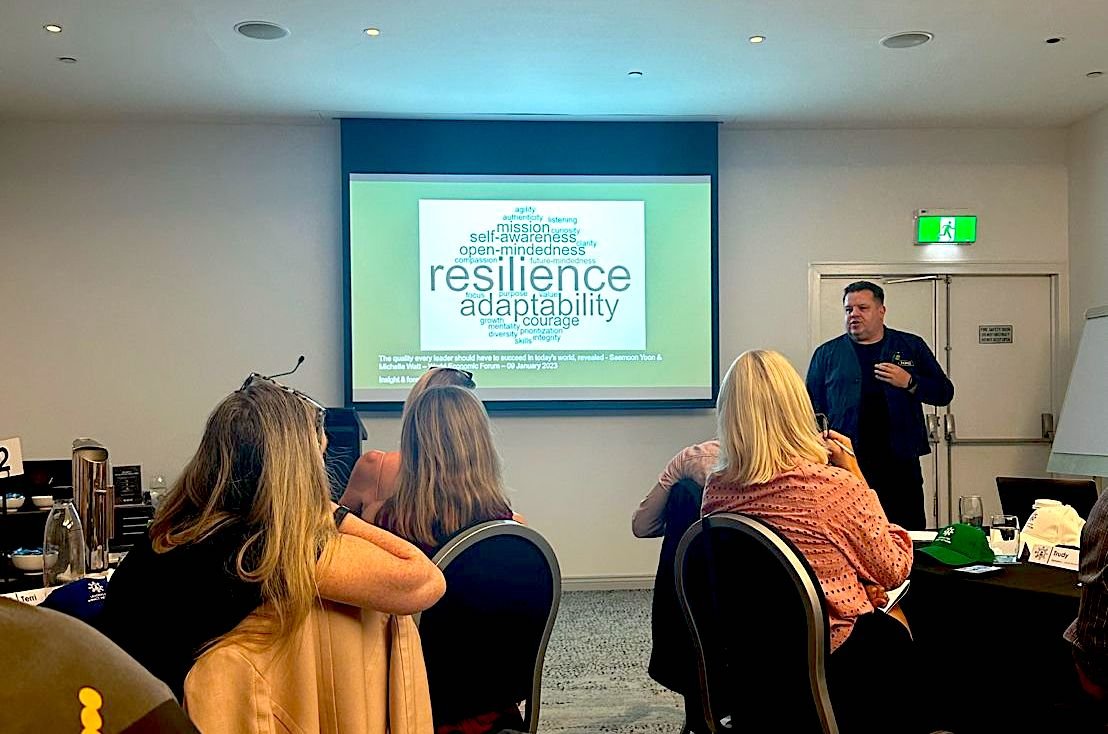
Exploring & Creating Futures Workshop: Leaders for IMPACT Network.
Foresight workshops: 18 & 19 January 2023, Leaders for IMPACT Network, Sydney, Australia.

Harnessing the Power of Foresight Teams.
You should read this if… you are a business leader considering how to embed foresight more deeply into your organisation rather than relying on ad‑hoc trend reports or individual insight. This article explains what foresight teams are, why they matter, and how the right mix of people, tools, and a futures‑focused culture enables organisations to turn emerging trends and signals into actionable insight. It shows how well‑supported foresight teams help leaders anticipate change, identify new opportunities, and make more confident strategic decisions—strengthening competitiveness and resilience in an increasingly complex and fast‑moving environment.

The Power of Prospection: An Introduction to Innovating From Everywhere.
You should read this if… you are a leader who wants to explore how innovation can emerge from anywhere in your organisation, not just from R&D or specialist teams. This article introduces prospection—our innate human ability to imagine and anticipate futures—as a critical first step in innovation and future‑focused decision‑making. It explains how deliberately using prospection helps leaders and organisations spot opportunities, remain agile, and make more intentional choices that shape their futures, even amid uncertainty. By embracing prospection, organisations can unlock innovation across teams, industries, and contexts, building confidence, creativity, and long‑term impact rather than waiting for change to arrive.

How To Be Ready For What Happens Next.
When your business is faced with times of uncertainty, it's essential to have a plan. Here are some tips for leaders on how to manage in difficult times.

Regenerative Leadership for a New Pathway Forward.
You should read this if… you are feeling that incremental change is no longer enough and are searching for a leadership approach better suited to today’s interconnected social, economic, and environmental challenges. This article introduces regenerative leadership as a pathway beyond short‑term fixes, explaining how it focuses on transforming systems rather than merely repairing them. It outlines how regenerative leaders think systemically, prioritise collaboration and collective intelligence, and consider the long‑term impacts of decisions on people, organisations, and the wider community—creating conditions for resilience, trust, and sustainable futures in times of deep uncertainty.

The Benefits of Shoshin: A Beginners Mind for Leaders.
You should read this if… you are a leader who feels the pressure to always have the answers and wants a leadership approach better suited to complexity and change. This article introduces shoshin, or beginner’s mind, and explains why approaching decisions with curiosity, openness, and humility can be a powerful advantage for leaders. It shows how shoshin helps leaders escape rigid expert thinking, foster creativity, encourage experimentation, and remain open to new perspectives—enabling better learning, more innovative problem‑solving, and stronger decision‑making in uncertain environments where adaptability matters more than certainty.

The Power of Curiosity in the Business World.
You should read this if… you are a business leader who wants to understand why curiosity is more than a personal trait and is, in fact, a strategic capability for leadership. This article explores how curiosity enables leaders to better understand their industry, customers, and emerging change by encouraging questions, challenging assumptions, and remaining open to new ideas and approaches. It shows how cultivating curiosity helps organisations adapt in uncertain environments, improve decision‑making, and foster cultures where learning, innovation, and meaningful transformation can take root—giving leaders an edge in an ever‑changing business world.

The Art of Foresight: Mapping Uncertainty and Opportunity.
You should read this if… you want to move your thinking from fearing uncertainty to using it as a strategic advantage. This article reframes foresight as a practical discipline for mapping uncertainty and opportunity by looking beyond prediction and instead exploring emerging change, trends, and multiple possible futures. It explains how embracing uncertainty—rather than trying to eliminate it—helps leaders make better decisions today, anticipate what might happen next, and position their organisations to respond with confidence and agility when change unfolds, turning disruption into a source of growth and long‑term success.

Making the Right Choices for Your Business in a Rapidly Changing World.
You should read this if… you are in business and feeling jammed between responding to urgent, day‑to‑day pressures and preparing your organisation for what might come next. This article explores how leaders can make better business choices in a rapidly changing world by balancing short‑term risks with long‑term opportunity. It explains why anticipating change, adopting agile and flexible strategies, and taking a risk‑aware approach to decision‑making are essential when technology, markets, regulation, and customer expectations are all in flux. By applying foresight, leaders can move beyond reactive choices and make more confident, informed decisions that keep their organisations resilient and competitive amid ongoing uncertainty.